Popular: BusinessWeek | HBR | USNWR | The Economist | Investments | ...
Showing posts with label social. Show all posts

Friday, December 12, 2008

Reader's Digest, November 2008


Reader's Digest, November 2008
English | PDF | 35.1MB

The Searcher
James Spring went looking for adventure. What he found: two little girls caught in a fractured family saga.

Quick Study: Alternative Energy
Sick of high gas prices? Get the facts on solar, wind, and biofuel.

The Air Up There
From way, way above the glass ceiling, four women astronauts reveal what's so cool about zero-g.

Beyond Tragedy
40 years after Bobby Kennedy's assassination, his eldest daughter shares what he taught her about life and death.


[FileFactory] Download Link
[DepositFiles] Download Link

Click Here to Download...

Saturday, October 25, 2008

U.S.News & World Report, Oct 27 2008


U.S.News & World Report, Oct 27 2008
English | PDF | 17.5MB

The Ultimate Voter's Guide 2008
Sizing up the opponents and the issues.

School Reform: An Education Evolution
D.C Schools Chancellor Michelle Rhee and other Teach for America alumni could bring a new approach.

A Texas-Size Success
Brownsville school district wins a major award.

Investing Guide: Picking Through the Wreckage
Someday, investors will see the Crash of 2008 as a bargain bin. But will it be any day soon?


[FileFactory] Download Link
[DepositFiles] Download Link

Click Here to Download...

Reader's Digest, October 2008


Reader's Digest, October 2008
English | PDF | 44.5MB

Get a Great Deal on Anything
From gas and cars to clothes and shoes, our guide to the best bargains on earth.

Cindy McCain, Michelle Obama
Reader's Digest interviews the wives of the presidential candidates.

The Supervoters
The candidates are paying special attention to a handful of voters in just a few states. Meet the people who may choose our next president.

Four Ways of Looking at a Map
Military, political, genetic, and satellite: cool cartography from around the world.


[FileFactory] Download Link
[DepositFiles] Download Link

Click Here to Download...

Monday, August 25, 2008

Reader's Digest, September 2008


Reader's Digest, September 2008Reader's Digest, September 2008
English | PDF | 23.6MB

Our 50 Funniest (True!) Stories
Gaffes! Retorts! Idiocy! Genius! The most hysterical tales we've ever published.

Four Ways of Looking at a Hat
From haute couture to high tech, headwear from around the world.

Take as Directed
Nearly 30% of us stop taking our medicines before we should. Why playing doctor can be dangerous.

Rebuilding New Orleans
3 years after Katrina, die-hard citizens like these 7 are bringing the city back to life.

Quick Study
What a weak dollar mean for you?

Who's Best for Our Future?
Exclusive interviews with Barack Obama and John McCain.


[FileFactory] Download Link
[DepositFiles] Download Link

Click Here to Download...

Friday, August 8, 2008

Time, July 28 2008


Time, July 28 2008Time, July 28 2008
English | PDF | 1.3MB

How to Save Afghanistan
As violence subsides in Iraq, it's surging in Afghanistan. A veteran diplomat and student of the country on what it really needs -- and why more troops won't help.

85% of US Unhappy with Economy
An exclusive TIME / Rockefeller Foundation poll shows unprecedented dissatisfaction -- and very little optimism.

Beijing's Revolution
On the eve of the Summer Games, China's capital is buzzing with a hot cultural scene, creative entrepreneurs and a collection of new buildings.

Rash Redux
Why chicken pox strikes some adults a second time -- as shingles -- and how to avoid the repeat.

Warming to the Kindle
How Josh Quittner learned to love Amazon's digital book-reading device despite its imperfections.

The Pursuit of Teen Girl Purity
Striking back against a Girls Gone Wild culture, many fathers and daughters are choosing a much different path.


[FileFactory] Download Link
[DepositFiles] Download Link

Click Here to Download...

Friday, August 1, 2008

The New Yorker, July 07-14 2008


The New Yorker, July 07-14 2008The New Yorker, July 07-14 2008
English | PDF | 4.1MB

The New Yorker is an American magazine that publishes reportage, commentary, criticism, essays, fiction, satire, cartoons, and poetry. Starting as a weekly in the mid-1920s, the magazine is now published 47 times per year, with five of these issues covering two-week spans.

Although its reviews and events listings often focus on the cultural life of New York City, The New Yorker has a wide audience outside of New York. It is well known for its commentaries on popular culture and eccentric Americana; its attention to modern fiction by the inclusion of short stories and literary reviews; its rigorous fact checking and copyediting; its journalism on world politics and social issues; and its famous, single-panel cartoons sprinkled throughout each issue.

COMMENT
Obama’s Iraq Problem
Last year’s rhetoric meets this year’s facts.
by George Packer

THE TALK OF THE TOWN
Thousand Words Dept.: By a Nose
A Rockland County mom draws Khalid Sheikh Mohammed.
by Ben McGrath

Back Pages Dept.: The Chill
The wild man behind “Wild Thing.”
by Nick Paumgarten

Annals of Naught: Nothing Doing
A Yankees team to remember.
by Roger Angell


[Rapidshare] Download Link

Click Here to Download...

Wednesday, July 30, 2008

The Weekly Standard August 4, 2008 Vol. 13, No. 44


The Weekly Standard August 4, 2008 Vol. 13, No. 44
English | PDF | 44 Pages | 2.5MB

The Weekly Standard August 4, 2008 Vol. 13, No. 44 The Weekly Standard is an American neoconservative opinion magazine published 48 times per year. It is owned by News Corporation and made its debut on September 17, 1995. Its current editors are founder William Kristol and Fred Barnes. The Weekly Standard produces The Daily Standard with commentary and articles written for the magazine's website. Other frequent contributors include Christopher Hitchens, P.J. O'Rourke, Charles Krauthammer, David Frum, Stephen Schwartz, Matt Labash, and Stephen F. Hayes.

COVER
First, Lose Three Straight Elections
by Fred Barnes

EDITORIAL
Look, Ma, No Arms
by Matthew Continetti

SCRAPBOOK
Impeachment redux, PC newspapers, etc.

ARTICLES
Dewey Like Obama
by Philip Terzian

Sweet Nothings
by Andrew Ferguson

Obama's Centrist Economic Team
by Cesar Conda


[Rapidshare] Download Link

Click Here to Download...

Tuesday, July 29, 2008

Why Men Don’t Listen & Women Can’t Read Maps: How We’re Different and What to Do About It by Barbara Pease, Allan Pease


Barbara Pease, Allan Pease | ISBN: 1566491568 | Publisher: Welcome Rain | 2000-06- 254 | English | PDF | 2.7 MB

Why Men Don’t Listen & Women Can’t Read Maps: How We’re Different and What to Do About It by Barbara Pease, Allan Pease The premises behind Why Men Don’t Listen and Women Can’t Read Maps is that all too often, these differences get in the way of fulfilling relationships and that understanding our basic urges can lead to greater self-awareness and improved relations between the sexes. The Peases spent three years researching their book–traveling the globe, talking to experts, and studying the cutting-edge research of ethnologists, psychologists, biologists, and neuroscientists–yet their work does not read a bit like “hard science.” In fact, the authors go to considerable lengths to point out that their book is intended to be funny, interesting, and easy to read; in short, this is a book whose primary purpose is to talk about “average men and women, that is, how most men and women behave most of the time, in most situations, and for most of the past.”

Why Men Don’t Listen, therefore, deals largely in generalizations, and this is bound to alienate some readers. “We don’t beat around the bush with suppositions or politically correct clich??s,” the Peases claim. Those up for an irreverent and unapologetic take on why men and women just can’t help themselves sometimes may just decide to read on.


[Rapidshare] Download Link
[DepositFiles] Download Link

Click Here to Download...

Friday, July 25, 2008

A Short History of Nearly Everything by Bill Bryson


A Short History of Nearly Everything by Bill Bryson # Author: Bill Bryson
# Hardcover: 560 pages

# Publisher: Broadway; 1 edition (May 6, 2003)

# Language: English

# ISBN-10: 0767908171

# ISBN-13: 978-0767908177

# Format: PDF | 1.1MB


As the title suggests, bestselling author Bryson (In a Sunburned Country) sets out to put his irrepressible stamp on all things under the sun. As he states at the outset, this is a book about life, the universe and everything, from the Big Bang to the ascendancy of Homo sapiens. "This is a book about how it happened," the author writes. "In particular how we went from there being nothing at all to there being something, and then how a little of that something turned into us, and also what happened in between and since." What follows is a brick of a volume summarizing moments both great and curious in the history of science, covering already well-trod territory in the fields of cosmology, astronomy, paleontology, geology, chemistry, physics and so on. Bryson relies on some of the best material in the history of science to have come out in recent years.

This is great for Bryson fans, who can encounter this material in its barest essence with the bonus of having it served up in Bryson's distinctive voice. But readers in the field will already have studied this information more in-depth in the originals and may find themselves questioning the point of a breakneck tour of the sciences that contributes nothing novel. Nevertheless, to read Bryson is to travel with a memoirist gifted with wry observation and keen insight that shed new light on things we mistake for commonplace. To accompany the author as he travels with the likes of Charles Darwin on the Beagle, Albert Einstein or Isaac Newton is a trip worth taking for most readers.


[Ziddu] Download Link

Click Here to Download...

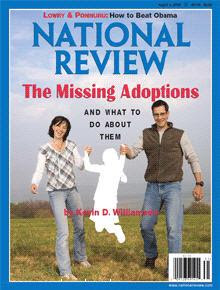
National Review, August 04 2008


National Review, August 04 2008National Review, August 04 2008
PDF | English | 21MB

National Review (NR) is a biweekly magazine and web site, founded by the late author William F. Buckley, Jr. in 1955 and based in New York City. It describes itself as "America's most widely read and influential magazine and web site for Republican/conservative news, commentary, and opinion." It is usually considered the centre of intellectual activity for the American Conservative movement in the twentieth century. While the print version of the magazine is available online to subscribers, the web site's free content is essentially a separate publication.

Content:
As an American institution, adoption is in decline and has been for 35 years. The decline isn’t in the number of families looking to adopt. Rather, this a supply-side problem. From 1952 to 1972, one in five white unwed mothers and one in ten unwed mothers overall chose adoption. On January 22, 1973, the cultural earthquake that was Roe v. Wade changed all that.


[Rapidshare] Download Link

Click Here to Download...

The Weekly Standard, July 28, 2008 Vol. 13, No. 43


The Weekly Standard July 28, 2008 Vol. 13, No. 43
Publisher: News America Publications, Inc. | ISSN : 1083-3013 | Language: English | Number of pages: 44 | PDF 2.4MB

The Weekly Standard, July 28, 2008  Vol. 13, No. 43 The Weekly Standard is an American neoconservative opinion magazine published 48 times per year. It is owned by News Corporation and made its debut on September 17, 1995. Its current editors are founder William Kristol and Fred Barnes. The Weekly Standard produces The Daily Standard with commentary and articles written for the magazine's website. Other frequent contributors include Christopher Hitchens, P.J. O'Rourke, Charles Krauthammer, David Frum, Stephen Schwartz, Matt Labash, and Stephen F. Hayes.

Contents:
The Future of Iraq by Kimberly Kagan
'Stunningly Shameful' by Stephen F. Hayes
Over to You, Speaker Pelosi by Matthew Continetti
Obamaweek, unsafe Idol, etc.


[Rapidshare] Download Link

Click Here to Download...

Tuesday, July 22, 2008

Focus, 30/2008


Focus, 30/2008
German | PDF | 8.76MB

Focus is a German weekly newsmagazine published in Munich and distributed throughout Germany. It is the third-largest weekly newsmagazine in Germany.

Focus was launched to pioneer a new style of journalism for readers short of time. The magazine was positioned against Der Spiegel and from day one has featured many color images and made heavy use of information graphics.

The magazine was founded by Helmut Markwort and Hubert Burda and was first published on January 18, 1993, with an initial circulation of around 478,000 [1]. The target audience is the "information elite", a term coined by Helmut Markwort who is also famous for his advertising slogan "facts, facts, facts".


[Rapidshare] Download Link


Click Here to Download...

Sunday, July 20, 2008

Der Spiegel, Nr.30/21.07.2008


Der Spiegel, Nr.30/21.07.2008Der Spiegel, Nr.30/21.07.2008
German | PDF | 15MB

Der Spiegel is a German weekly magazine, published in Hamburg. It is one of Europe's largest and most influential weekly magazines with a circulation of more than one million per week.


[Rapidshare] Download Link

Click Here to Download...

Friday, July 18, 2008

Red State, Blue State, Rich State, Poor State: Why Americans Vote the Way They Do by Andrew Gelman


Red State, Blue State, Rich State, Poor State: Why Americans Vote the Way They Do by Andrew Gelman   # Author: Andrew Gelman
# Publisher: Princeton University Press
# Number Of Pages: 248
# Publication Date: 2008-08-07
# ISBN-10: 069113927X
# ISBN-13: 9780691139272
# Format: PDF | 4MB

On the night of the 2000 presidential election, Americans sat riveted in front of their televisions as polling results divided the nation's map into red and blue states. Since then the color divide has become a symbol of a culture war that thrives on stereotypes--pickup-driving red-state Republicans who vote based on God, guns, and gays; and elitist, latte-sipping blue-state Democrats who are woefully out of touch with heartland values. Red State, Blue State, Rich State, Poor State debunks these and other political myths.

With wit and prodigious number crunching, Andrew Gelman gets to the bottom of why Democrats win elections in wealthy states while Republicans get the votes of richer voters, how the two parties have become ideologically polarized, and other issues. Gelman uses eye-opening, easy-to-read graphics to unravel the mystifying patterns of recent voting, and in doing so paints a vivid portrait of the regional differences that drive American politics. He demonstrates in the plainest possible terms how the real culture war is being waged among affluent Democrats and Republicans, not between the haves and have-nots; how religion matters for higher-income voters; how the rich-poor divide is greater in red not blue states--and much more.

Red State, Blue State, Rich State, Poor State is a must-read for anyone seeking to make sense of today's fractured American political landscape.
Myths and facts about the red and the blue:

Myth: The rich vote based on economics, the poor vote "God, guns, and gays."
Fact: Church attendance predicts Republican voting much more among rich than poor.

Myth: A political divide exists between working-class "red America" and rich "blue America."
Fact: Within any state, more rich people vote Republican. The real divide is between higher-income voters in red and blue states.

Myth: Rich people vote for the Democrats.
Fact: George W. Bush won more than 60 percent of high-income voters.

Myth: Religion is particularly divisive in American politics.
Fact: Religious and secular voters differ no more in America than in France, Germany, Sweden, and many other European countries.


[Rapidshare] Download Link
[EasyShare] Download Link

Click Here to Download...

Tuesday, July 15, 2008

TIME Magazine June 30, 2008 Vol. 171 No. 26


TIME Magazine June 30, 2008 Vol. 171 No. 26 (U.S. Edition)
PDF + MP3 | English | 1.8 + 6.8 MB

TIME Magazine June 30, 2008 Vol. 171 No. 26 • COVER: The Great Wall of America - The US is erecting miles of new fences along much of the Mexican border. Can a barrier stop the tide of illegal aliens?

• SOCIETY: Should You Drink with Your Kids? - The effort to stamp out underage alcohol use has failed, creating a culture in which young people binge in secret. John Cloud suggests there's a better way

• ARTS & ENTERTAINMENT: Graphic Novels are Hollywood's Newest Gold Mine - Graphic novels — long comic books for grownups — have also become the movie industry's most reliable development tool

• PEOPLE: 10 Questions for Steve Carell - From The 40-Year-Old Virgin to The Office's clueless boss Michael Scott, he's made hilariously awkward comedy an art form. His new film, Get Smart, is in theaters. Steve Carell will now take your questions


[Rapidshare] Download Link (pdf)
[
Rapidshare] Download Link (audio)

Click Here to Download...

Saturday, July 12, 2008

You Can Hear Me Now: How Microloans and Cell Phones are Connecting the World's Poor to the Global Economy by Nicholas P. Sullivan


Nicholas P. Sullivan | Jossey-Bass (February 2, 2007) | English | 272 Pages | ISBN-10: 0787986097 # ISBN-13: 978-0787986094 | PDF | 1MB

You Can Hear Me Now: How Microloans and Cell Phones are Connecting the World's Poor to the Global Economy by Nicholas P. SullivanUntil recently, the outlook for many of the poorest people in Bangladesh was dismal. Despite previous long-term aid from the international community to improve the country's infrastructure and economy, sustainable development was hampered by corruption and governmental inefficiency. This book tells the story of Western-trained entrepreneur Iqbal Quadir, the driving force behind the creation of GrameenPhone, the largest Bangladeshi GSM (Global System for Mobile) cell-phone operation. Quadir had the innovative idea of using local Western-trained entrepreneurs to help villagers attain micro-loans funded by foreign investors (and generated by Nobel Peace Prize winner Muhammad Yanus) and then showing villagers how to operate cell-phone leasing businesses.

Sullivan refers to this successful business model as the "external combustion engine" because of its impressive multiplier effects on economic growth. Applications of this model in other poverty-stricken areas worldwide have repeatedly yielded similar results. This book offers valuable insights about the use of cell phones and technology-based investments to generate wealth and demonstrates that entrepreneurship may be more fruitful than aid. This valuable work can be effectively integrated into public administration, global business, and human resource academic courses.

"Grameen Bank has an impact on the poor, GrameenPhone on the entire economy."
—Muhammad Yunus,winner of the 2006 Nobel Peace Prize

"You Can Hear Me Now is a powerful proof of the roles that the private sector can play in economic development. Sullivan, by picking one industry—wireless—and cleverly weaving the economics and the growth of the industry with the human dimension, provides a distinctively new perspective on what is possible. A must-read for all those who are concerned about eradicating poverty. Equally, a must-read for managers who are looking for new engines of growth."
—C.K. Prahalad, Paul and Ruth McCracken Distinguished University Professor, The Ross School of Business, the University of Michigan; author, The Fortune at the Bottom of the Pyramid


[Paid4Share] Download Link

Click Here to Download...

Strategic Alliances as Social Facts: Business, Biotechnology, and Intellectual History by Mark De Rond


Strategic Alliances as Social Facts# Author: Mark De Rond, Anne Huff (Foreword)
# Hardcover: 230 pages
# Publisher: Cambridge University Press (July 14, 2003)
# Language: English
# ISBN-10: 0521811104
# ISBN-13: 978-0521811101
# Format: PDF | 1.3MB

Strategic alliances are generally analyzed as planned and rational developments with clearly measurable outcomes in traditional management textbooks. Mark de Rond argues that such a view is unrealistic. Instead, he emphasizes the social dimension and the importance of the individuals involved inside alliances.

Based on in-depth case studies of three major biotechnology alliances, the book combines insights from social theory and intellectual history with more mainstream strategic management literature.

It provides a thought-provoking analysis that appeals to the reflective professional as well as academic researchers.

How can we explain a proliferation of alliances when the probability of failure is higher than success? And why have we emphasized their order, manageability and predictability whilst acknowledging that they tend to be experienced as messy, politically charged and unpredictable? Mark de Rond, in this provocative book, sets out to address such paradoxes.

Based on in-depth case studies of three major biotechnology alliances, he suggests that we need theories to explain idiosyncracy as well as social order. He argues that such theories must allow for social conduct to be active and self-directed but simultaneously inert and constrained, thus permitting voluntarism, determinism, and serendipity alike to explain causation in alliance life. The book offers a highly original combination of insights from social theory and intellectual history with more mainstream strategic management and organizations literature.

It is a refreshing and thought-provoking analysis that will appeal to practitioner and academic researcher alike.


[Ziddu] Download Link

Click Here to Download...

Thursday, July 10, 2008

Microfilms by Serge Daney


Microfilms by Serge Daney

Serge Daney: "Microfilms" (1985-1990) [Audiobook]
French | 7:04:05 + 1:30:12 (bonus) | AAC (m4a) 64kbps mono VBR | 236 MB

Sélection de 12 Microfilms, ces conversations hebdomadaires que Serge Daney animait avec une intelligence rare sur France Culture entre 1985 et 1990 avec des réalisateurs, des acteurs, des critiques...

Daney est aimé par beaucoup de gens qui n’ont pas lu une seule ligne de lui : car Serge Daney était avant tout une voix, un ton, toujours inspirés, qui reflétaient une intelligence en constant mouvement, en constante recherche. Cette voix, certains l’ont connue à la télévision où l’"Itinéraire d’un ciné-fils", devenu un grand succès en DVD avait d’abord été diffusé sur la défunte et regrettée émission Océaniques de FR3. Mais C’est à la radio que beaucoup l’ont entendue pour la première fois : Microfilms, entre 1985 et 1990 où, en lieu et place d’interviews traditionnelles, Serge Daney conversait de façon totalement inspirante avec ses invités. Loin du bruit habituel des émissions de cinéma, un lieu où la parole coulait à flots, pour mieux comprendre, mieux sentir, mieux rêver. Abeille Musique

Invités des 12 Microfilms:

Claude Dityvon
Jane Birkin
Alain Cavalier
Jacques Demy
Marguerite Duras
Humbert Balsan
Jean-Claude Biette
Olivier Assayas
Johann van der Keuken
Eric Rohmer

+ 2 Microfilms bonus:
Wim Wenders
Elisabeth Roudinesco (autour du Batman de Tim Burton)


[Rapidshare] Download Link
http://rapidshare.com/files/126932972/DNYMCRFLMS.part1.rar
http://rapidshare.com/files/126938938/DNYMCRFLMS.part2.rar
http://rapidshare.com/files/126944277/DNYMCRFLMS.part3.rar

Click Here to Download...

The Great Contraction, 1929-1933 by Milton Friedman


Milton Friedman | Princeton University Press | 2008-08-21 | ISBN: 0691137943 | 320 pages | PDF | 1.5 MB

The Great Contraction, 1929-1933 by Milton FriedmanFriedman and Schwartz's A Monetary History of the United States, 1867-1960, published in 1963, stands as one of the most influential economics books of the twentieth century. A landmark achievement, the book marshaled massive historical data and sharp analytics to support the claim that monetary policy--steady control of the money supply--matters profoundly in the management of the nation's economy, especially in navigating serious economic fluctuations. The chapter entitled "The Great Contraction, 1929-33" addressed the central economic event of the century, the Great Depression. Published as a stand-alone paperback in 1965, The Great Contraction, 1929-1933 argued that the Federal Reserve could have stemmed the severity of the Depression, but failed to exercise its role of managing the monetary system and ameliorating banking panics.

The book served as a clarion call to the monetarist school of thought by emphasizing the importance of the money supply in the functioning of the economy--a concept that has come to inform the actions of central banks worldwide.
This edition of the original text includes a new preface by Anna Jacobson Schwartz, as well as a new introduction by the economist Peter Bernstein. It also reprints comments from the current Federal Reserve chairman, Ben Bernanke, originally made on the occasion of Milton Friedman's 90th birthday, on the enduring influence of Friedman and Schwartz's work and vision.


[Rapidshare] Download Link
[DepositFiles] Download Link

Click Here to Download...

Tuesday, July 8, 2008

Cities Ranked and Rated: More than 400 Metropolitan Areas Evaluated in the U.S. and Canada by Bert Sperling, Peter Sander


Bert Sperling, Peter Sander | John Wiley & Sons | 2004-03 | ISBN: 076452562X | 832 pages | PDF | 6.8 MB

Cities Ranked and Rated


Cities Ranked & Rated: Your Guide to the Best Places to Live in the U.S. & Canada provides timely facts and unbiased information on over 400 U.S. and 30 Canadian cities in an easy-to-access format. Whether you're mulling over the idea of relocating, trying to decide where to start out, or just curious about how your hometown stacks up, you’ll be intrigued by Cities Ranked & Rated.

In addition to providing population statistics, each city is ranked on a number of essential factors, many of which are of vital interest in today's economy. Categories include: economy and jobs, cost of living, climate, education, health and health care, crime, transportation, leisure, and arts and culture. Easy-to-use tables help you put this wealth of information to work to find the city that best suits your special needs and interests.


[Rapidshare]Download Link
[FileFactory] Download Link

Click Here to Download...
Popular: economics | biotech | biography | management | language | technology