Popular: BusinessWeek | HBR | USNWR | The Economist | Investments | ...
Showing posts with label economics. Show all posts

Saturday, October 25, 2008

U.S.News & World Report, Oct 27 2008


U.S.News & World Report, Oct 27 2008
English | PDF | 17.5MB

The Ultimate Voter's Guide 2008
Sizing up the opponents and the issues.

School Reform: An Education Evolution
D.C Schools Chancellor Michelle Rhee and other Teach for America alumni could bring a new approach.

A Texas-Size Success
Brownsville school district wins a major award.

Investing Guide: Picking Through the Wreckage
Someday, investors will see the Crash of 2008 as a bargain bin. But will it be any day soon?


[FileFactory] Download Link
[DepositFiles] Download Link

Click Here to Download...

Friday, August 8, 2008

Time, July 28 2008


Time, July 28 2008Time, July 28 2008
English | PDF | 1.3MB

How to Save Afghanistan
As violence subsides in Iraq, it's surging in Afghanistan. A veteran diplomat and student of the country on what it really needs -- and why more troops won't help.

85% of US Unhappy with Economy
An exclusive TIME / Rockefeller Foundation poll shows unprecedented dissatisfaction -- and very little optimism.

Beijing's Revolution
On the eve of the Summer Games, China's capital is buzzing with a hot cultural scene, creative entrepreneurs and a collection of new buildings.

Rash Redux
Why chicken pox strikes some adults a second time -- as shingles -- and how to avoid the repeat.

Warming to the Kindle
How Josh Quittner learned to love Amazon's digital book-reading device despite its imperfections.

The Pursuit of Teen Girl Purity
Striking back against a Girls Gone Wild culture, many fathers and daughters are choosing a much different path.


[FileFactory] Download Link
[DepositFiles] Download Link

Click Here to Download...

Wednesday, August 6, 2008

India: The Emerging Giant by Arvind Panagariya


India: The Emerging Giant by Arvind Panagariya# Author: Arvind Panagariya
# Publisher: Oxford University Press, USA
# Number Of Pages: 544
# Publication Date: 2008-03-03
# ISBN-10: 0195315030
# ISBN-13 : 9780195315035

India is not only the world’s largest and fiercely independent democracy, but also an emerging economic giant. But to date there has been no comprehensive account of India’s remarkable growth or the role policy has played in fueling this expansion. India: The Emerging Giant fills this gap, shedding light on one of the most successful experiments in economic development in modern history.

Why did the early promise of the Indian economy not materialize and what led to its eventual turnaround? What policy initiatives have been undertaken in the last twenty years and how do they relate to the upward shift in the growth rate? What must be done to push the growth rate to double-digit levels? To answer these crucial questions, Arvind Panagariya offers a brilliant analysis of India’s economy over the last fifty years–from the promising start in the 1950s, to the near debacle of the 1970s (when India came to be regarded as a “basket case”), to the phenomenal about face of the last two decades. The author illuminates the ways that government policies have promoted economic growth (or, in the case of Indira Gandhi’s policies, economic stagnation), and offers insightful discussions of such key topics as poverty and inequality, tax reform, telecommunications (perhaps the single most important success story), agriculture and transportation, and the government’s role in health, education, and sanitation.


[Rapidshare] Download Link
[MediaFire] Download Link

Click Here to Download...

Saturday, August 2, 2008

Freakonomics: A Rogue Economist Explores the Hidden Side of Everything by Steven D. Levitt, Stephen J. Dubner


Freakonomics: A Rogue Economist Explores the Hidden Side of Everything by Steven D. Levitt, Stephen J. Dubner# Author: Steven D. Levitt, Stephen J. Dubner
# Page Count: 242 pages
# Publisher: William Morrow; 1 edition (April 12, 2005)
# Language: English
# ISBN-10: 006073132X
# ISBN-13: 978-0060731328
# Format: PDF | 2.3MB

Which is more dangerous, a gun or a swimming pool? What do schoolteachers and sumo wrestlers have in common? Why do drug dealers still live with their moms? How much do parents really matter? What kind of impact did Roe v. Wade have on violent crime?

These may not sound like typical questions for an economist to ask. But Steven D. Levitt is not a typical economist. He is a much heralded scholar who studies the stuff and riddles of everyday life-;from cheating and crime to sports and child rearing-;and whose conclusions regularly turn the conventional wisdom on its head. He usually begins with a mountain of data and a simple, unasked question. Some of these questions concern life-and-death issues; others have an admittedly freakish quality. Thus the new field of study contained in this book: freakonomics.

Through forceful storytelling and wry insight, Levitt and co-author Stephen J. Dubner show that economics is, at root, the study of incentives-;how people get what they want, or need, especially when other people want or need the same thing. In Freakonomics, they set out to explore the hidden side of … well, everything. The inner workings of a crack gang. The truth about real-estate agents. The myths of campaign finance. The telltale marks of a cheating schoolteacher. The secrets of the Ku Klux Klan.


[Ziddu] Download Link

Click Here to Download...

Friday, August 1, 2008

Time, July 21 2008


Time, July 21 2008Time, July 21 2008
English | PDF | 1.2 MB

Mandela: His 8 Lessons of Leadership
As he celebrates his 90th birthday, the world's greatest moral leader reflects on a lifetime of service -- and what the rest of us can learn from it.

Is Florida the Sunset State?
Beset by a housing crash, environmental chaos and political turmoil, Florida confronts the death of a dream.

The Truth about Plastic
It's in just about everything--which may be harmful to you and the planet. How to shrink your plastic footprint.


Post Apocalypse
The Web needs commenters. But are they ruining the Net faster than they can save it?

The Not-Quite Bailout
Congress's housing bill won't stop the foreclosure mess. That doesn't mean it's a bad idea.

Batman Is Back
The new Batman epic is a violent, masterly weave of madness and dread.


[Ziddu] Download Link
[DepositFiles] Download Link

Click Here to Download...

Wednesday, July 30, 2008

The Weekly Standard August 4, 2008 Vol. 13, No. 44


The Weekly Standard August 4, 2008 Vol. 13, No. 44
English | PDF | 44 Pages | 2.5MB

The Weekly Standard August 4, 2008 Vol. 13, No. 44 The Weekly Standard is an American neoconservative opinion magazine published 48 times per year. It is owned by News Corporation and made its debut on September 17, 1995. Its current editors are founder William Kristol and Fred Barnes. The Weekly Standard produces The Daily Standard with commentary and articles written for the magazine's website. Other frequent contributors include Christopher Hitchens, P.J. O'Rourke, Charles Krauthammer, David Frum, Stephen Schwartz, Matt Labash, and Stephen F. Hayes.

COVER
First, Lose Three Straight Elections
by Fred Barnes

EDITORIAL
Look, Ma, No Arms
by Matthew Continetti

SCRAPBOOK
Impeachment redux, PC newspapers, etc.

ARTICLES
Dewey Like Obama
by Philip Terzian

Sweet Nothings
by Andrew Ferguson

Obama's Centrist Economic Team
by Cesar Conda


[Rapidshare] Download Link

Click Here to Download...

Saturday, July 26, 2008

The Undercover Economist: Exposing Why the Rich Are Rich, the Poor Are Poor--and Why You Can Never Buy a Decent Used Car! by Tim Harford


The Undercover Economist: Exposing Why the Rich Are Rich, the Poor Are Poor--and Why You Can Never Buy a Decent Used Car! by Tim Harford# Author: Tim Harford
# Hardcover: 288 pages

# Publisher: Oxford University Press, USA (November 1, 2005)
# Language: English
# ISBN-10: 0195189779

# ISBN-13: 978-0195189773

# Format: PDF | 2.4MB


Nattily packaged-the cover sports a Roy Lichtensteinesque image of an economist in Dick Tracy garb-and cleverly written, this book applies basic economic theory to such modern phenomena as Starbucks' pricing system and Microsoft's stock values. While the concepts explored are those encountered in Microeconomics 101, Harford gracefully explains abstruse ideas like pricing along the demand curve and game theory using real world examples without relying on graphs or jargon.

The book addresses free market economic theory, but Harford is not a complete apologist for capitalism; he shows how companies from Amazon.com to Whole Foods to Starbucks have gouged consumers through guerrilla pricing techniques and explains the high rents in London (it has more to do with agriculture than one might think). Harford comes down soft on Chinese sweatshops, acknowledging "conditions in factories are terrible," but "sweatshops are better than the horrors that came before them, and a step on the road to something better." Perhaps, but Harford doesn't question whether communism or a capitalist-style industrial revolution are the only two choices available in modern economies. That aside, the book is unequaled in its accessibility and ability to show how free market economic forces affect readers' day-to-day.


[Ziddu] Download Link
[4Shared] Download Link

Click Here to Download...

Rocking Wall Street: Four Powerful Strategies That will Shake Up the Way You Invest, Build Your Wealth And Give You Your Life Back by Gary Marks


Rocking Wall Street: Four Powerful Strategies That will Shake Up the Way You Invest, Build Your Wealth And Give You Your Life Back by Gary Marks # Author: Gary Marks
# Publisher: Wiley
# Number Of Pages: 224
# Publication Date: 2007-02-02
# ISBN-10: 0470124873
# ISBN-13: 9780470124871
# Format: PDF | 2.3MB

". . . the only four investment strategies you will ever need. . . I dare anyone to read this book and not wake up to the realities of Wall Street, and change their investing habits on the spot."
-Steve Trager Watson Retired CEO and CIO of the hedge fund Watson Investment Partners, LP

"A true Renaissance man and teacher, Gary Marks adeptly explores four investment strategies that can achieve strong results and peace of mind-two concepts usually considered mutually exclusive in the world of Wall Street investing. Using his vast experience and folksy storytelling, Gary provides lessons, anecdotes, and strategies that will help readers find multiple levels of success."
-Mitch Levine Founder and CEO, Enable Capital Management

"Rocking Wall Street brings a musician's heart and soul to the investment process, balancing strategic investing with 'living your life.' Marks's creative approach is sure to strike a major chord with both new and seasoned investors."
-Kerry Paul Altman, PhD Clinical Psychologist

"Rocking Wall Street tips the scales over to the side of the investor and away from the hype masters and media 'experts,' whose lures and promises all seem to vanish in a bear market."
-Michael J. Sell Former auditor, CPA, Investment Consultant


[Rapidshare] Download Link
[MediaFire] Download Link

Click Here to Download...

Friday, July 25, 2008

National Review, August 04 2008


National Review, August 04 2008National Review, August 04 2008
PDF | English | 21MB

National Review (NR) is a biweekly magazine and web site, founded by the late author William F. Buckley, Jr. in 1955 and based in New York City. It describes itself as "America's most widely read and influential magazine and web site for Republican/conservative news, commentary, and opinion." It is usually considered the centre of intellectual activity for the American Conservative movement in the twentieth century. While the print version of the magazine is available online to subscribers, the web site's free content is essentially a separate publication.

Content:
As an American institution, adoption is in decline and has been for 35 years. The decline isn’t in the number of families looking to adopt. Rather, this a supply-side problem. From 1952 to 1972, one in five white unwed mothers and one in ten unwed mothers overall chose adoption. On January 22, 1973, the cultural earthquake that was Roe v. Wade changed all that.


[Rapidshare] Download Link

Click Here to Download...

Economic Events, Ideas, and Policies: The 1960's and After by George L. Perry, James Tobin


Economic Events, Ideas, and Policies: The 1960's and After by George L. Perry, James Tobin # Author: George L. Perry, James Tobin
# Publisher: Brookings Institution Press
# Number Of Pages: 365
# Publication Date: 2000-08
# ISBN-10: 081577012X
# ISBN-13: 9780815770121
# Format: PDF | 3MB

The 1960s represented a turning point in the application of economic analysis to U.S. policymaking. The decade was marked by widespread optimism that government policies could improve economic and social outcomes. Developments since then illustrate how policies can shift, along with changes in the environment, changes in theory and understanding, or changes in dominant values. The papers in this volume are taken from a November 1999 conference: Economic Events, Ideas and Policies: The 1960s and After. Sponsored by Yale University and the Brookings Institution, the conference was held in memory of economist Arthur Okun. Okun, along with George L. Perry, founded the Brookings Panel on Economic Activity and its journal, the Brookings Papers on Economic Activity.

A former professor of economics at Yale University and chairman of the President's Council on Economic Advisers, Okun authored many important articles and books, including Equality and Efficiency, a Brookings bestseller. Prices and Quantities, published after his death in 1980, is still considered a major professional contribution to macroeconomic analysis and the problems confronting stabilization policy. Contributors include William J. Baumol (Princeton University, New York University), Robert Haveman (University of Wisconsin), Barry Eichengreen (University of California), Richard Cooper (Harvard University), Alan Krueger (Princeton University), Paul Krugman (Massachusetts Institute of Technology), Robert Solow (Massachusetts Institute of Technology), William Brainard (Yale University), and George Perry (Brookings Institution).


[Rapidshare] Download Link
[EasyShare] Download Link

Click Here to Download...

Tuesday, July 22, 2008

Focus, 30/2008


Focus, 30/2008
German | PDF | 8.76MB

Focus is a German weekly newsmagazine published in Munich and distributed throughout Germany. It is the third-largest weekly newsmagazine in Germany.

Focus was launched to pioneer a new style of journalism for readers short of time. The magazine was positioned against Der Spiegel and from day one has featured many color images and made heavy use of information graphics.

The magazine was founded by Helmut Markwort and Hubert Burda and was first published on January 18, 1993, with an initial circulation of around 478,000 [1]. The target audience is the "information elite", a term coined by Helmut Markwort who is also famous for his advertising slogan "facts, facts, facts".


[Rapidshare] Download Link


Click Here to Download...

Guide to Financial Markets (The Economist) by Marc Levinson


Guide to Financial Markets (The Economist) by Marc Levinson# Author: Marc Levinson
# Publisher: Bloomberg Press
# Number Of Pages: 250
# Publication Date: 2006-03-01

# ISBN-10: 157660201X

# ISBN-13: 9781576602010

# Format: PDF | 1.5MB


Extensively revised and updated, this fourth edition brings the reader up to speed with the latest developments in financial markets, providing a brilliantly clear guide to a complex world that even those who work in it often find hard to understand. With chapters on the markets that deal with money, foreign exchange, equities, bonds, commodities, financial futures, options and other derivatives, the book explains why these markets exist, how they work, and who trades in them, and provides a run-down of the factors that affect prices and rates.


[4Shared] Download Link
[Ziddu] Download Link

Click Here to Download...

Sunday, July 20, 2008

Microeconomics for MBAs: The Economic Way of Thinking for Managers by Richard B. McKenzie, Dwight R. Lee


MBA微观经济学:管理者的经济学思维Microeconomics for MBAs: The Economic Way of Thinking for Managers by Richard B. McKenzie, Dwight R. Lee
# Author: Richard B. McKenzie, Dwight R. Lee
# Publisher: Cambridge University Press
# Number Of Pages: 716
# Publication Date: 2006-02-13
# ISBN-10: 0521859816
# ISBN-13: 9780521859813
# Format: PDF | 8.3MB

This is the first textbook in microeconomics written exclusively for MBA students. McKenzie/Lee minimizes attention to mathematics and maximizes attention to intuitive economic thinking. The text is structured clearly and accessibly: Part I of each chapter outlines the basic theory and Part II applies this basic theory to management issues. 'Perspective' sections in each chapter provide a new line of argument or different take on a business or policy issue, and carefully chosen topics and review questions are designed to spark lively and instructive debates.

The accompanying DVD contains modules of Professor McKenzie talking informally with students, and elucidates complex lines of argument as well as acting as a revision aid. Throughout the book, McKenzie and Lee aim to infuse students with the economic way of thinking in the context of a host of problems that MBA students, as future managers of real-world firms, will find relevant to their career goals.


[Rapidshare] Download Link
[EasyShare] Download Link

Click Here to Download...

Der Spiegel, Nr.30/21.07.2008


Der Spiegel, Nr.30/21.07.2008Der Spiegel, Nr.30/21.07.2008
German | PDF | 15MB

Der Spiegel is a German weekly magazine, published in Hamburg. It is one of Europe's largest and most influential weekly magazines with a circulation of more than one million per week.


[Rapidshare] Download Link

Click Here to Download...

Saturday, July 19, 2008

Guide to Economic Indicators by Norman Frumkin


Norman Frumkin | M.E. Sharpe; 4 edition (December 31, 2005) | 304 Pages | ISBN-10: 0765616475 | English | PDF | 1MB

Guide to Economic Indicators by Norman FrumkinInvariably, for either the occasional or a frequent user of economic statistics, questions will arise about some aspect of a particular series; even the best of us cannot remember everything! Now in its third edition, this handy reference book is a reliable source of useful information about more than seventy economic indicators, mostly those issued by government agencies but also by private organizations as well. In total, just about every series likely to be used in interpreting economic information is covered.

The economic indicators are arranged alphabetically, mostly with accompanying tables that reflect recent trends. Each section contains the following information about each indicator:

1. When and where the data are available, i.e., the originating organization, the publication containing the date the data are available and the time period covered;

2. The content, i.e., the details of the information provided;

3. The methodology of preparation, i.e., from other reports, from surveys, from estimates, derived from other data, etc.;

4. The accuracy of the data, i.e., estimates of sampling error or revisions, or just "no valid estimates;"

5. The relevance of the data in interpreting economic developments; and

6. References from the primary data source, indicating where further information and explanations can be found.


[Paid4Share] Download Link

Click Here to Download...

Friday, July 18, 2008

Economic Analysis of Law in China by Thomas Eger, Michael Faure, Zhang Naigen


Economic Analysis of Law in China by Thomas Eger, Michael Faure, Zhang Naigen # Author: Thomas Eger, Michael Faure, Zhang Naigen
# Publisher: Edward Elgar Publishing
# Number Of Pages: 324
# Publication Date: 2007-09-30
# ISBN-10: 1847200362
# ISBN-13: 9781847200365
# Format: PDF | 3.1MB

`This is an extremely valuable collection of essays on modern Chinese law viewed through the lens of the law and economics movement. China is developing very rapidly and law is now understood to provide the essential framework for economic development - provided the law itself is economically rational. The essays in this volume are excellent examples of how economics can be used to clarify and guide the law applicable to the essential dimensions of the economy. I recommend it wholeheartedly and without reservations.'
- Richard A. Posner, United States Court of Appeals for the Seventh Circuit and University of Chicago Law School, US

`This book brings together important applications of law and economics to China and covers a wide range of issues, including such basic concerns as property rights, intellectual property, and taxation, as well as competition law and corporate and securities law. Because of its breadth of coverage, its focus on the particulars of Chinese law, and the expertise of its scholars - both Western and Chinese - it should serve as a valuable reference work for years to come.'
- Steven Shavell, Harvard Law School, US

`This book is an important step toward a Chinese scholarship in law and economics, written by leading law and economics researchers from China and Europe.'
- Hans-Bernd Schaefer, Universität Hamburg, Germany

`In China everything is different, you cannot apply ordinary economics and the legal framework is idiosyncratic. In the course of time, such statements turned out to be prejudices, and the Eger/ Faure/ Zhang volume makes perfectly clear that, for instance, a law and economics approach can shed new light into the intricacies and complexities of Chinese institutional arrangements. Indeed, China creates new puzzles for economic and legal analysis. On the other hand, however, the Chinese need not invent the wheel anew - and they do not try it. The book shows instances where a sophisticated law and economics approach can help to develop the legal framework which is appropriate for the transition from a planned into a market economy. The Chinese economic system is not (yet) a normal capitalist market economy, neither is the legal system adapted to a normal private property economy. Nevertheless the chapters of the book apply fruitfully law and economics theories and thus prove their general applicability. One of the outstanding achievements of the volume can be seen in the fact that it recruited more than half of its contributors with a Chinese background. They learn eagerly western approaches and they learn fast. And, of course, they have no problems with understanding Chinese culture and society. So the book combines most profitably the look from the outside and the look from within with a common theoretical framework.'
- Hans-Jrgen Wagener, Europa University Viadrina, Germany

This book comprises contributions on recent developments in China from a law and economics perspective. For the first time Chinese and European scholars jointly discuss some important attributes of China's legal and economic system, and some recent problems, from this particular viewpoint.

The authors apply an economic analysis of law not only to general characteristics of China's social order, such as the specific type of federal competition, the efficiency of taxation and regulation, and the importance of informal institutions (Guanxi), but also to distinct areas of Chinese law such as competition policy, professional regulation, corporate governance and capital markets, oil pollution, intellectual property rights and internet games. The contributors discuss to what extent the law and economic models that have so far been employed within the context of developed countries can be applied to a country like China as well. The European scholars use law and economics in order to determine what China could learn from the European experience. The Chinese scholars discuss whether law and economics can be of any use in analysing the particular features of the Chinese legal system today.

Economic Analysis of Law in China will appeal to lawyers, economists and social scientists in China interested in developing legal institutions with an eye on economic efficiency. Scholars generally interested in the economic analysis of law, as well as in the comparison and transition of economic systems, will also find much in this book that will be of interest to them.


[Rapidshare] Download Link
[EasyShare] Download Link

Click Here to Download...

Tuesday, July 15, 2008

The Little Book That Beats the Market by Joel Greenblatt


Joel Greenblatt | Wiley (November 19, 2005) | English | 176 Pages | ISBN-10: 0471733067 | ISBN-13: 978-0471733065 | PDF | 664KB

Contrary to efficient-market naysayers, this engaging investment primer contends that ordinary stock-market investors can indeed get better-than-market returns over the long haul. Greenblatt (You Can Be a Stock Market Genius), a Columbia Business School adjunct professor, touts a "value-oriented" approach that looks for bargain stocks whose share price is cheap relative to the company's profitability. His version is a "magic formula" that ranks stocks on the basis of two variables—the earnings yield and the business's return on capital.

His Web site, magicformulainvesting.com, virtually automates the procedure for novices. Greenblatt offers lots of statistical proof of the formula's success, but emphasizes the importance of faith in seeing the investor through inevitable short-term downturns: "It will be your belief in the overwhelming logic of the magic formula that will make the formula work for you in the long run." He conveys his ideas through a lucid if rudimentary and rather corny explanation of basic investment concepts about risk, return, interest and business valuation.

Although the fabulous returns he touts seem too good to be true, Greenblatt's formula is a reasonable variant of mainstream value-investing methods. Investors seeking a little more hands-on excitement than the average mutual fund offers won't go too far wrong following his advice.


[Ziddu] Download Link

Click Here to Download...

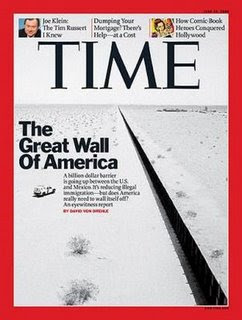
TIME Magazine June 30, 2008 Vol. 171 No. 26


TIME Magazine June 30, 2008 Vol. 171 No. 26 (U.S. Edition)
PDF + MP3 | English | 1.8 + 6.8 MB

TIME Magazine June 30, 2008 Vol. 171 No. 26 • COVER: The Great Wall of America - The US is erecting miles of new fences along much of the Mexican border. Can a barrier stop the tide of illegal aliens?

• SOCIETY: Should You Drink with Your Kids? - The effort to stamp out underage alcohol use has failed, creating a culture in which young people binge in secret. John Cloud suggests there's a better way

• ARTS & ENTERTAINMENT: Graphic Novels are Hollywood's Newest Gold Mine - Graphic novels — long comic books for grownups — have also become the movie industry's most reliable development tool

• PEOPLE: 10 Questions for Steve Carell - From The 40-Year-Old Virgin to The Office's clueless boss Michael Scott, he's made hilariously awkward comedy an art form. His new film, Get Smart, is in theaters. Steve Carell will now take your questions


[Rapidshare] Download Link (pdf)
[
Rapidshare] Download Link (audio)

Click Here to Download...

Saturday, July 12, 2008

You Can Hear Me Now: How Microloans and Cell Phones are Connecting the World's Poor to the Global Economy by Nicholas P. Sullivan


Nicholas P. Sullivan | Jossey-Bass (February 2, 2007) | English | 272 Pages | ISBN-10: 0787986097 # ISBN-13: 978-0787986094 | PDF | 1MB

You Can Hear Me Now: How Microloans and Cell Phones are Connecting the World's Poor to the Global Economy by Nicholas P. SullivanUntil recently, the outlook for many of the poorest people in Bangladesh was dismal. Despite previous long-term aid from the international community to improve the country's infrastructure and economy, sustainable development was hampered by corruption and governmental inefficiency. This book tells the story of Western-trained entrepreneur Iqbal Quadir, the driving force behind the creation of GrameenPhone, the largest Bangladeshi GSM (Global System for Mobile) cell-phone operation. Quadir had the innovative idea of using local Western-trained entrepreneurs to help villagers attain micro-loans funded by foreign investors (and generated by Nobel Peace Prize winner Muhammad Yanus) and then showing villagers how to operate cell-phone leasing businesses.

Sullivan refers to this successful business model as the "external combustion engine" because of its impressive multiplier effects on economic growth. Applications of this model in other poverty-stricken areas worldwide have repeatedly yielded similar results. This book offers valuable insights about the use of cell phones and technology-based investments to generate wealth and demonstrates that entrepreneurship may be more fruitful than aid. This valuable work can be effectively integrated into public administration, global business, and human resource academic courses.

"Grameen Bank has an impact on the poor, GrameenPhone on the entire economy."
—Muhammad Yunus,winner of the 2006 Nobel Peace Prize

"You Can Hear Me Now is a powerful proof of the roles that the private sector can play in economic development. Sullivan, by picking one industry—wireless—and cleverly weaving the economics and the growth of the industry with the human dimension, provides a distinctively new perspective on what is possible. A must-read for all those who are concerned about eradicating poverty. Equally, a must-read for managers who are looking for new engines of growth."
—C.K. Prahalad, Paul and Ruth McCracken Distinguished University Professor, The Ross School of Business, the University of Michigan; author, The Fortune at the Bottom of the Pyramid


[Paid4Share] Download Link

Click Here to Download...

Thursday, July 10, 2008

Economic Geography by Pierre-Philippe Combes, Thierry Mayer, Jacques-Francois Thisse


Pierre-Philippe Combes, Thierry Mayer, Jacques-Francois Thisse | Princeton University Press | 2007-09-01 | ISBN: 0691124590 | 416 pages | PDF | 9.8 MB

Economic Geography by Pierre-Philippe Combes, Thierry Mayer, Jacques-Francois ThisseEconomic Geography is the most complete, up-to-date textbook available on the important new field of spatial economics. This book fills a gap by providing advanced undergraduate and graduate students with the latest research and methodologies in an accessible and comprehensive way. It is an indispensable reference for researchers in economic geography, regional and urban economics, international trade, and applied econometrics, and can serve as a resource for economists in government.

Economic Geography presents advances in economic theory that explain why, despite the increasing mobility of commodities, ideas, and people, the diffusion of economic activity is very unequal and remains agglomerated in a limited number of spatial entities. The book complements theoretical analysis with detailed discussions of the empirics of the economics of agglomeration, offering a mix of theoretical and empirical research that gives a unique perspective on spatial disparities.

It reveals how location continues to matter for trade and economic development, yet how economic integration is transforming the global economy into an economic space in which activities are performed within large metropolitan areas exchanging goods, skills, and information. Economic Geography examines the future implications of this evolution in the spatial economy and relates them to other major social and economic trends.

  • Provides a complete introduction to economic geography
  • Explains the latest theory and methodologies
  • Covers the empirics of agglomeration, from spatial concentration measurement to structural estimations of economic geography models
  • Includes history and background of the field
  • Serves as a textbook for students and a resource for professionals

[Rapidshare] Download Link
[DepositFiles] Download Link

Click Here to Download...
Popular: economics | biotech | biography | management | language | technology